How Much Sleep Do You Really Need? A Practical Guide to Sleep Cycles, Bedtimes, and Better Rest
Learn how much sleep you really need, how sleep cycles affect rest, and how a sleep calculator or bedtime calculator can help you choose the best time to sleep and wake up.
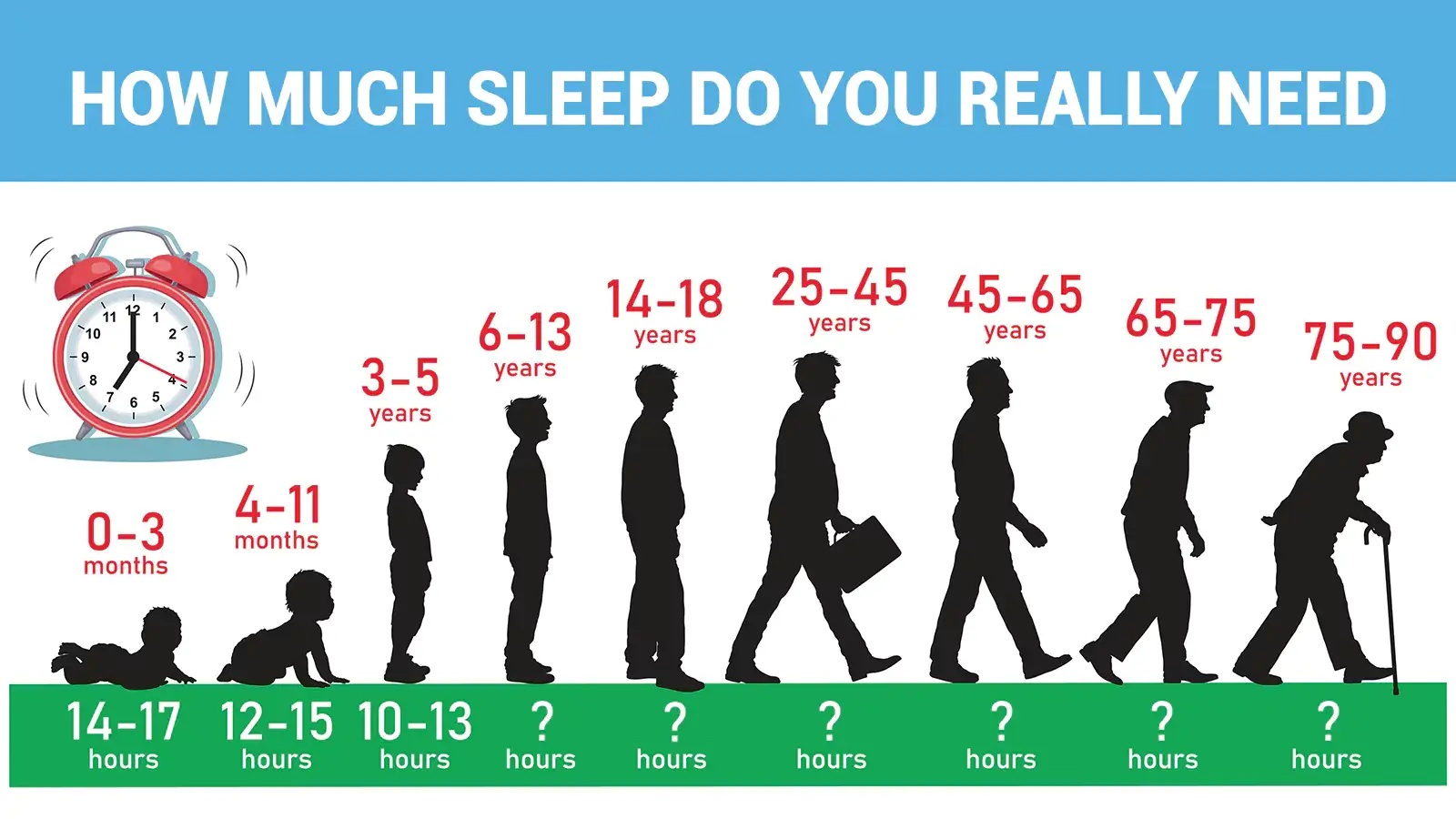
How Much Sleep Do You Really Need?
The question of how much sleep you really need sounds simple, but the real answer is more nuanced than “8 hours for everyone.” For most healthy adults, the standard recommendation is about 7 to 9 hours of sleep per night, while many public health sources set at least 7 hours as the minimum healthy target for adults. At the same time, experts also note that individual needs vary. Some people function well near the lower end of the range, while others genuinely need more to feel restored, focused, and emotionally steady.
That distinction matters because a lot of people confuse “I survived the day” with “I got enough sleep.” Those are not the same thing. It is possible to drag yourself through meetings, errands, workouts, and social life on too little sleep, but that does not mean your brain and body are operating at their best. Harvard Health notes that the guidelines are general, not rigid rules, but NHLBI and CDC both make clear that regularly sleeping under 7 hours is associated with more health problems and poorer functioning over time.
This is where people often ask a smarter follow-up question: if sleep needs vary, how do you figure out your own number? That is exactly why tools like a sleep calculator, sleep cycle calculator, bedtime calculator, and wake up time calculator have become so popular. They do not magically reveal a perfect number written in the stars, but they can help you line up your bedtime and wake time with the way normal sleep cycles tend to work. The stronger idea is to use them as planning tools. The weaker idea is to treat them like a substitute for paying attention to how rested you actually feel.
Why the “8 Hours” Rule Is Useful but Incomplete
The “8 hours” message remains popular because it is easy to remember and usually close enough to be useful. For adults, most major guidance points to 7 to 9 hours as the healthy range, so 8 hours sits neatly in the middle. But the problem begins when people turn a guideline into a rigid identity. If you sleep 7 hours and feel consistently sharp, stable, and recovered, you are not automatically broken. If you sleep 8 hours but still wake up exhausted and foggy, the number alone is not solving the problem.
Age also changes the picture. CDC guidance shows that newborns, children, teens, adults, and older adults do not need the same amount of sleep. For example, teens generally need 8 to 10 hours, adults ages 18 to 60 need 7 or more hours, adults ages 61 to 64 need 7 to 9 hours, and adults 65 and older usually need 7 to 8 hours. So when people ask, “How much sleep do you really need?” the first honest answer is that it depends partly on your life stage.
The more interesting challenge is not whether you hit an exact textbook number every single night. It is whether your current pattern leaves you feeling consistently functional. Harvard’s sleep experts note that some people naturally need a bit less than seven hours and some need more, which is useful because it stops the conversation from becoming robotic. At the same time, that flexibility should not become an excuse people use to romanticize chronic sleep deprivation. Most adults are not rare biological exceptions. Most adults just need more sleep than they admit.
How Sleep Cycles Affect the Way You Feel
This is where a sleep cycle calculator starts to make sense. Sleep is not one flat block of unconsciousness. It moves through repeated cycles of lighter sleep, deeper sleep, and REM sleep across the night. While exact timing varies from person to person, many calculators are built around the common idea that one full cycle is roughly 90 minutes. That is why people often use them to count backward from a wake-up time or forward from a bedtime to estimate when they may feel more refreshed. The logic is not perfect, but it is grounded in the fact that waking in the middle of a deep stage can leave you feeling much worse than waking closer to the end of a cycle.
This does not mean you should obsess over every 90-minute block as if sleep were a train timetable. Real sleep is messier than that. People take time to fall asleep, wake briefly during the night, and do not move through every stage with machine-like precision. Still, the popularity of the bedtime calculator and wake up time calculator comes from something real: timing matters, not just total hours. A person who sleeps 7.5 hours aligned with relatively complete cycles may feel better than someone who sleeps 8 hours with worse timing and more interruptions.
That is also why asking for the best time to sleep is not a silly question, but it does need to be framed correctly. There is no universal bedtime that works for every human being. The better question is: what bedtime gives you enough total sleep and matches a schedule you can repeat consistently? Sleep quality and regularity matter alongside duration, and the National Sleep Foundation has highlighted sleep consistency as part of overall sleep health.
What a Sleep Calculator Can Actually Help You Do
A sleep calculator is most useful when you already know your target wake-up time. Instead of vaguely deciding to “sleep more,” you can work backward and set a bedtime that gives you a realistic window for 7, 7.5, 8, or 9 hours, often with some extra time added to account for falling asleep. This is especially practical for people who have fixed mornings for work, school, or commuting. It turns sleep from a wish into a schedule.
A bedtime calculator is also helpful because it exposes bad planning very quickly. If you need to wake up at 6:30 a.m. and want 8 hours of sleep, the math does not care that you enjoy scrolling until midnight. That is the value of these tools: they force a confrontation between what you say you need and what your evening habits actually allow. In that sense, the calculator is less about advanced science and more about honesty.
A wake up time calculator works the other way around. If you know when you are getting into bed, it helps estimate sensible wake-up points based on typical cycle lengths. This can be useful when you have some flexibility in the morning or when you want to avoid waking at a point that leaves you especially groggy. But it only works well when your assumptions are realistic. If you go to bed at 11:00 p.m. and do not actually fall asleep until 12:10 a.m., the calculation is already off. The calculator can guide timing, but it cannot fix bad sleep habits, a noisy environment, stress, or a body that is still wide awake.
Sleep Quantity vs Sleep Quality
One reason this topic keeps confusing people is that sleep quantity and sleep quality are not identical. You can spend 8 hours in bed and still get mediocre rest if you wake often, take too long to fall asleep, or keep an inconsistent schedule. CDC notes that signs of good sleep quality include not taking too long to fall asleep and not waking often or for long periods during the night. The National Sleep Foundation also describes sleep quality as an important part of sleep health alongside duration, satisfaction, and regularity.
That is why the best time to sleep is not just “early” or “late.” The better answer is that the best time is the one that allows enough sleep, matches your daily demands, and is consistent enough that your body is not constantly being jerked between different rhythms. Harvard and sleep foundation guidance both support the idea that consistency matters more than dramatic short-term fixes. Even when some weekend catch-up sleep may be helpful after a week of insufficient rest, that does not turn chronic irregularity into a strong long-term strategy.
| Tool | Best use | What it helps with |
|---|---|---|
| Sleep calculator | Planning total sleep time | Helps match bedtime to wake-up needs |
| Sleep cycle calculator | Estimating cycle-based wake points | Helps reduce grogginess from poor timing |
| Bedtime calculator | Working backward from a required morning alarm | Helps decide when to get in bed |
| Wake up time calculator | Choosing sensible wake times from a fixed bedtime | Helps structure a more realistic morning |
| Planning for the best time to sleep | Building a repeatable routine | Helps connect timing, consistency, and recovery |
The strength of this approach is that it makes sleep more practical and less abstract. The weakness is that some people become obsessed with the tool instead of the outcome. If your calculator says 10:42 p.m. but your real life only supports something close to 10:30 or 11:00, chasing fake precision is not the point. The goal is not mathematical perfection. The goal is better rest.
How to Tell If You Need More Sleep Than You Think
A lot of people underestimate their sleep needs because tiredness becomes their normal. They adapt to brain fog, low patience, caffeine dependence, and uneven concentration, then assume that is just adulthood. But CDC and NHLBI both make clear that insufficient sleep is common and that adults who regularly sleep less than 7 hours are more likely to have health issues. More than 1 in 3 American adults do not get the recommended amount of sleep, so feeling chronically under-rested is common, but that does not make it healthy.
You may need more sleep than you think if you rely on alarms like emergency sirens, feel half-functional until caffeine kicks in, crash on weekends, or notice you are more emotionally reactive when tired. Those are not subtle signs of peak recovery. They are signals that your current amount may be enough to keep you moving, but not enough to keep you well-regulated. A more strategic question is not “Can I survive on this?” but “Would my mood, focus, patience, and health be stronger with 30 to 90 more minutes?” Often the answer is yes.
Here are some practical clues that your current sleep target may be too low:
- you regularly sleep under 7 hours
- need multiple alarms
- feel groggy for a long time after waking
- depend heavily on caffeine
- catch up with very long weekend sleep
- notice worse focus and mood after several short nights
So, What Is the Best Time to Sleep?
The honest answer is that the best time to sleep is the time that you can maintain consistently while still getting enough total rest for your body. For many adults with standard morning obligations, that means setting a bedtime that protects a 7- to 9-hour window before waking. If you need to get up at 6:30 a.m., your best bedtime is probably not “whenever I get sleepy after midnight.” It is more likely somewhere between about 9:30 p.m. and 11:00 p.m., depending on how much sleep you need and how long you usually take to fall asleep. That is exactly where a bedtime calculator becomes useful.
The stronger strategy is to choose a bedtime you can repeat 5 to 7 nights a week rather than chasing an ideal that only exists in theory. The weaker strategy is to sleep too little on weekdays, oversleep dramatically on weekends, and call the average “balance.” Real sleep health usually looks less glamorous than that. It looks like structure, consistency, and giving your body enough hours to do its job.
Final Thoughts on How Much Sleep You Really Need
So how much sleep do you really need? For most adults, the evidence-based answer is about 7 to 9 hours, with at least 7 hours as the lower healthy threshold for most people. But that number only becomes useful when you connect it to real life: your age, your wake-up obligations, your sleep quality, and how you actually feel during the day.
That is why tools like a sleep calculator, sleep cycle calculator, bedtime calculator, and wake up time calculator can be genuinely helpful. They turn general advice into a concrete plan and help you choose a more realistic best time to sleep. But the deeper point is simpler than any calculator. If your sleep leaves you restored, stable, and functional most days, your schedule is probably moving in the right direction. If it leaves you tired, foggy, and dependent on recovery tactics every weekend, then your body is already answering the question for you.